











In this article for The Edit, Stephanie Newton MSc of Diamond Wellbeing explores how buried grief can quietly shape our habits, sleep and relationships, and shares gentle first steps for processing grief.
Navigating the Complexities of Loss and Grief
Everyone experiences grief differently. When someone you love and deeply care about passes away, it can bring about emotions that were entirely unexpected, depending on your situation and relationship.
For some, the death may have been expected or a long time coming. You might feel secure in your relationship with them and at peace with their passing. You miss them deeply, but as time moves on, that person holds a special place in your heart that brings warmth and love.
However, you may instead experience a confusing mixture of love, guilt, relief or unspoken resentment. These complex feelings can be difficult to acknowledge, particularly if they don’t fit with how you think you should feel. You may push them aside, only to notice their influence on your thoughts and behaviour later.
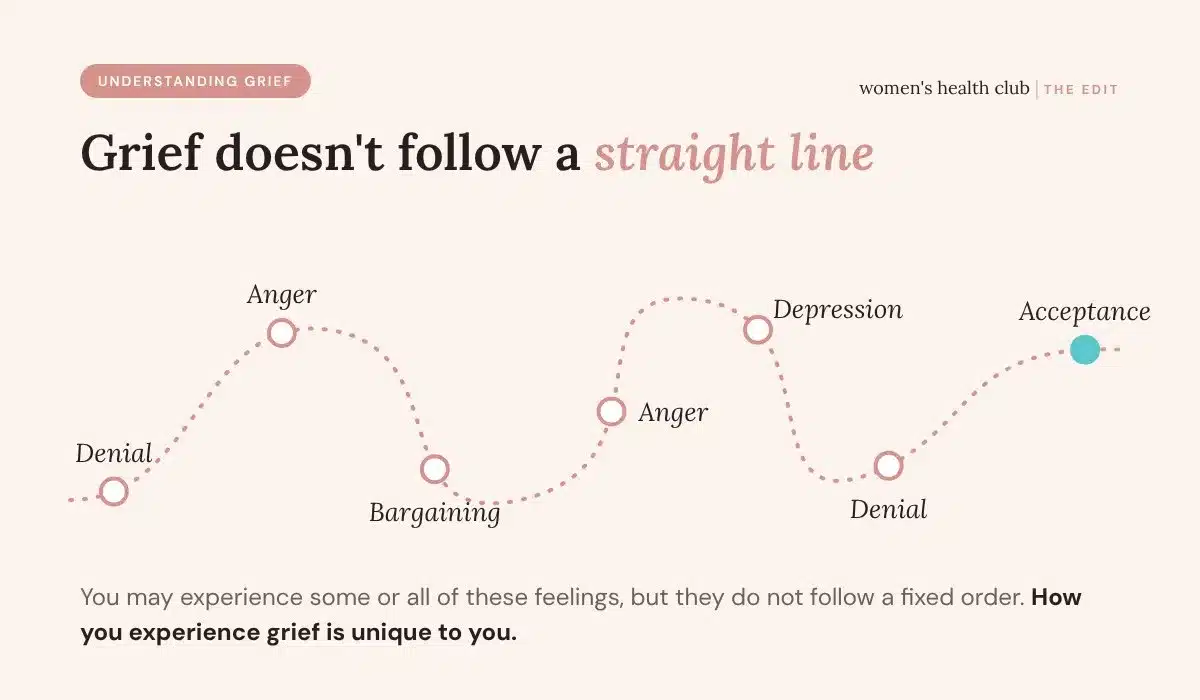
Elisabeth Kübler-Ross described five stages: denial, anger, bargaining, depression and acceptance. Originally developed through her work with people facing their own death, the model was later applied to bereavement. You may experience some or all of these feelings, but they do not follow a fixed order. How you experience grief is unique to you (Cruse Bereavement Support, n.d.).
How Grief Can Influence Our Daily Habits
Grief looks different for everyone, but sometimes we develop behaviours that help us avoid facing painful emotions. For example, you might find yourself avoiding socialising and spending more time doing solo activities.
Going to the gym can be a great way of improving your mood and releasing tension. However, if you feel you must constantly keep busy to avoid how you feel, it may become difficult to give yourself the rest and emotional space you need.
You might also start drinking more alcohol or turning to comfort food. These habits can increase gradually, and you may not realise that the loss of this important person could be contributing to them.
For some people, the pain of grief can still feel fresh many years after a loss. The passing of time does not necessarily mean that difficult feelings have become easier to understand or live with.
Recognising When You May Need Support with Grief
You may notice irritability, difficulty sleeping or a sense of disconnection from other people. When it is difficult to accept that a loved one has passed away, it can feel confusing, as though your mind hasn’t caught up with reality.
You may even feel as though the person is still around. This experience does not necessarily mean that something is wrong or that you are grieving in an unhealthy way.
Bowlby’s work explored the relationship between attachment, separation and loss, including the longing and searching that can follow the death of someone close (Bowlby, 1980). Losing someone who helped you feel safe and secure can leave you struggling to adjust to life without them.
If you find it difficult to feel secure in relationships, you may be more vulnerable to persistent grief that feels overwhelming and affects your daily life. A review of 22 studies involving 5,149 participants found that attachment anxiety was consistently associated with symptoms of complicated grief. Attachment avoidance was also linked to these difficulties, although the findings were less consistent (Russ et al., 2024).
If you tend to feel anxious in relationships, you may find yourself overwhelmed by the loss and struggling to shift your attention away from it. If you tend to avoid relying on others, seeking comfort and support may feel more difficult. These patterns do not mean that you will necessarily struggle more with grief, but understanding them can help you recognise the type of support you need.
When memories of that person bring up sadness, guilt or resentment, you may begin avoiding those memories altogether. In doing so, it can become harder to connect with the happy, joyous moments you shared, too.
How Grief Can Affect You Physically
Grief can feel physically exhausting as well as emotionally painful. You may notice changes in your sleep, appetite or digestion, alongside tension and tiredness.
The connection between how we feel emotionally and physically is an important part of looking after ourselves. Giving yourself space to acknowledge your grief, alongside caring for your body, may help you feel more at ease. Any new or persistent physical symptoms should also be discussed with your GP.
Practical Steps Towards Processing Grief
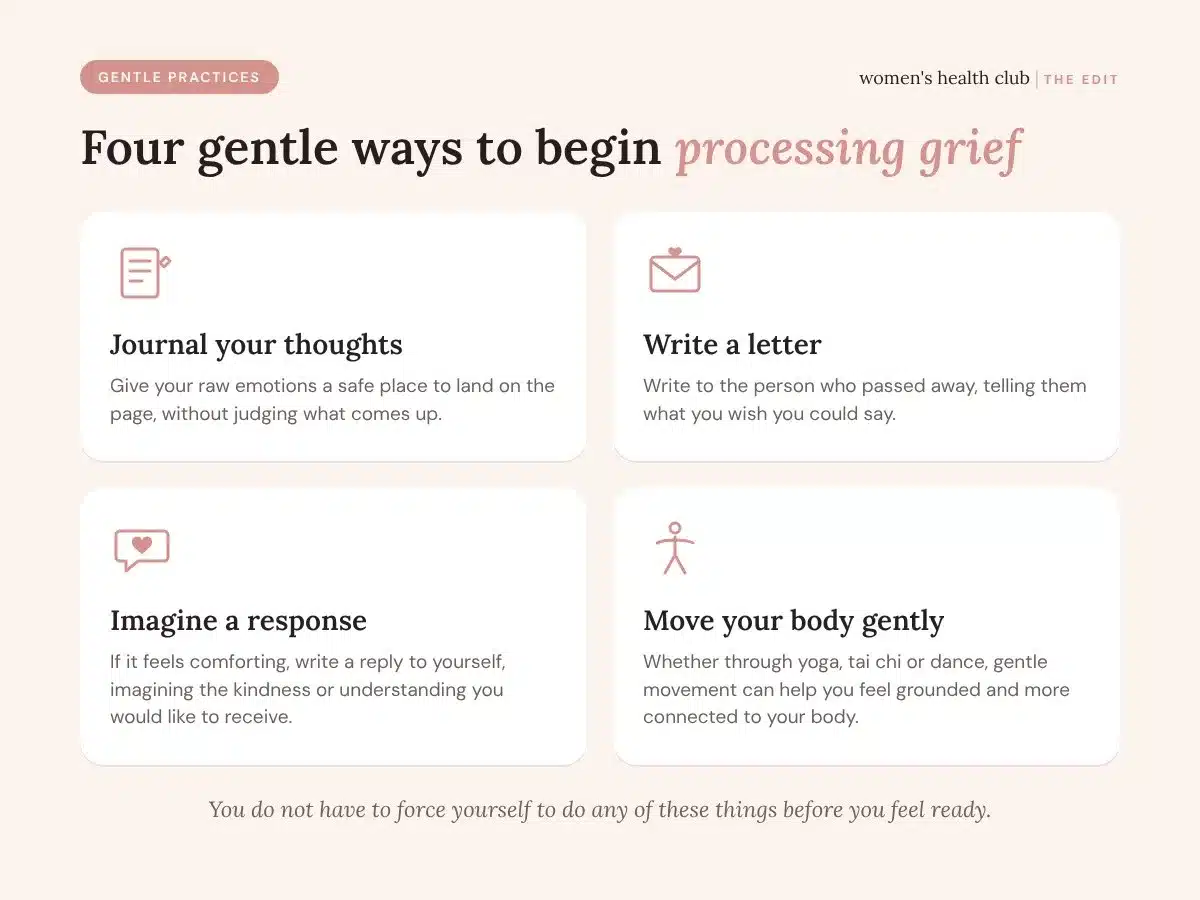
Gaining a better understanding of how grief is shaping your life can be a powerful first step. If you are looking for ways to begin exploring your feelings, consider trying these gentle practices:
- Journal your thoughts: Give your raw emotions a safe place to land on the page, without judging what comes up.
- Write a letter: Write to the person who passed away, telling them what you wish you could say.
- Imagine a response: If it feels comforting, write a reply to yourself, imagining the kindness or understanding you would like to receive.
- Move your body gently: Whether through yoga, tai chi or dance, gentle movement can help you feel grounded and more connected to your body.
You do not have to force yourself to do any of these things before you feel ready.
How Havening Techniques® Can Help with Grief

If these steps feel too overwhelming right now, a therapy I highly recommend exploring is Havening Techniques®.
As a certified Havening Techniques practitioner, I have observed how Havening can help clients work through painful feelings associated with grief and experience a sense of relief.
In my work, I have seen how easing the emotional weight surrounding a loss can make space for joyous memories to resurface. Instead of feeling overwhelmed by anger, guilt or sadness whenever you think about that person, you may begin to connect with the warmth and love you shared.
Sometimes, clients come to me because they want help with a habit, such as excessive drinking, without having considered whether grief may be contributing to it. Our work together can provide space to explore those feelings and any memories that arise, helping them better understand their experience and begin making positive changes.
If you would like to know more about Havening Techniques® and how I work, please visit www.diamondwellbeing.co.uk. I would be happy to offer a free telephone consultation to discuss how I can help.
Need someone to talk to now?
Cruse Bereavement Support offers a free national helpline on 0808 808 1677. If you are struggling to cope or feel unsafe, you can call Samaritans any time, day or night, on 116 123, or speak to your GP.
Frequently Asked Questions About Grief
Do the five stages of grief happen in order?
No. Elisabeth Kübler-Ross described five stages: denial, anger, bargaining, depression and acceptance. You may experience some or all of these feelings, but they do not follow a fixed order. How you experience grief is unique to you.
Is it normal to feel as though the person is still around?
Yes, this can happen. When it is difficult to accept that a loved one has passed away, it can feel as though your mind hasn’t caught up with reality. Feeling that the person is still around does not necessarily mean that something is wrong or that you are grieving in an unhealthy way.
Can grief affect you physically?
Yes. Grief can feel physically exhausting as well as emotionally painful, and you may notice changes in your sleep, appetite or digestion, alongside tension and tiredness. Any new or persistent physical symptoms should be discussed with your GP.
Can grief be behind habits like drinking more?
It can be. Some people start drinking more alcohol or turning to comfort food after a loss, and these habits can increase gradually without you realising that grief could be contributing to them.
How can I start processing grief?
Gentle practices such as journalling your thoughts, writing a letter to the person who passed away, imagining a kind response, and moving your body gently can be a good place to begin. You do not have to do any of these before you feel ready.
References and Further Reading
Bowlby, J. (1980). Attachment and loss: Volume 3. Loss: Sadness and depression. Hogarth Press and the Institute of Psycho-Analysis.
Cruse Bereavement Support. (n.d.). Understanding the five stages of grief. Read online.
Russ, V., Stopa, L., Sivyer, K., Hazeldine, J., & Maguire, T. (2024). The relationship between adult attachment and complicated grief: A systematic review. OMEGA—Journal of Death and Dying, 89(4), 1293–1319. https://doi.org/10.1177/00302228221083110

About the author
Stephanie Newton MSc, GMBPsS
Private and Corporate Wellbeing Practitioner at Diamond Wellbeing, based in Alderley Edge and Wilmslow, Cheshire, with online sessions across the UK and internationally.
Enjoyed this article? Join the Women’s Health Club mailing list for more expert-led advice from The Edit.
Content is for general information only and is not a substitute for medical advice. Always seek the guidance of a qualified health professional.