








If your mind switches on the moment your head hits the pillow, you’re not alone. In this article for The Edit, Advanced Clinical Hypnotherapist Stephanie Newton MSc of Diamond Wellbeing shares a gentle, step-by-step guide to using self-hypnosis for sleep.
Sleep is often considered an essential pillar of wellbeing. Without a good night’s sleep, you would likely feel irritated, less focused, more forgetful and less motivated.
However, when it comes to night-time, what should feel like a natural part of human life can become challenging due to the stress built up from the day, week or even years. It could be that your mind has formed a habit of switching on before bed or trying to resolve problems too late in the day.
Self-hypnosis is a technique that uses focused attention, imagination and gentle suggestion to help you relax your mind and body. Here is a step-by-step process that may help you drift off to sleep more easily.
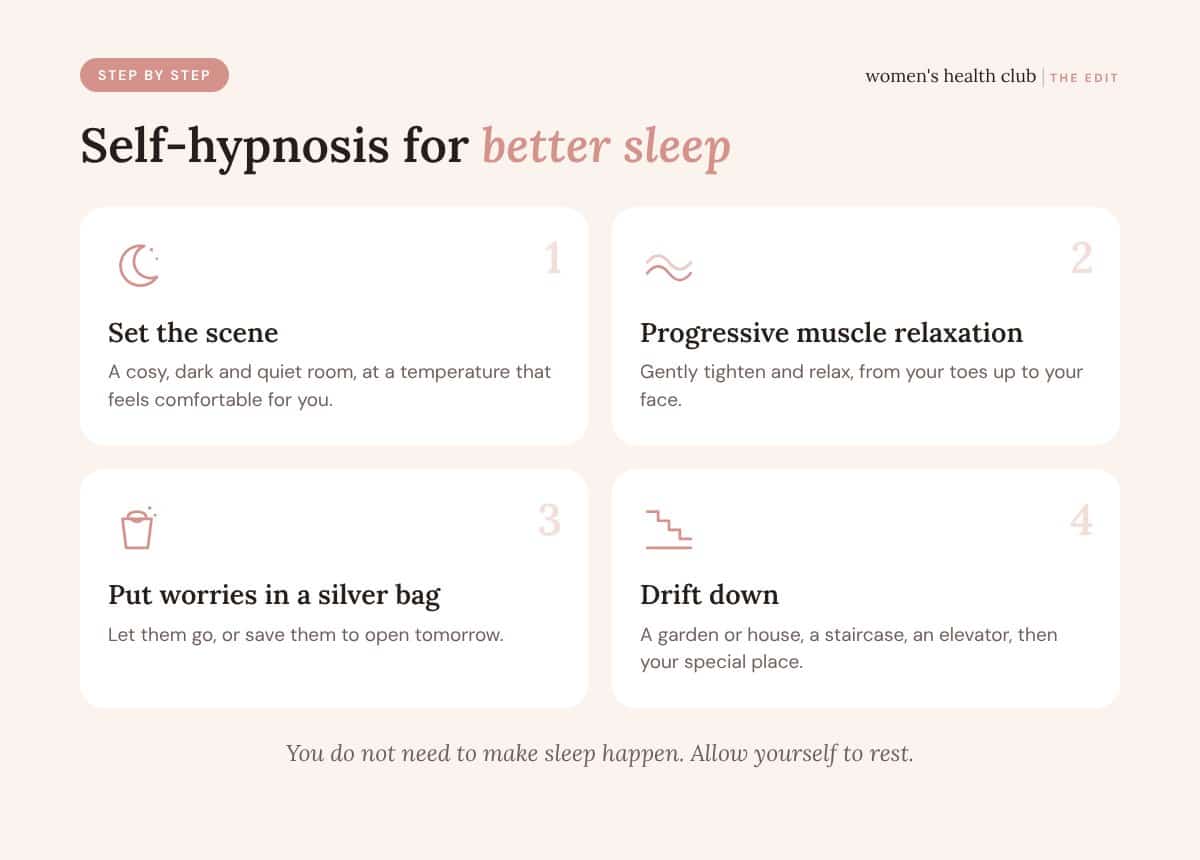
Set the Scene
Firstly, ensure your sleeping environment is lovely, comfortable and cosy. Perhaps a bedside lamp for soft lighting, a mattress that feels right for you, and fresh, clean bedding. Reading a book can help to slow the mind down and conjure up pictures ready for dreaming. When you are ready to sleep, make the room dark and quiet.

Your body temperature is also an important part of allowing you to wind down. Ensure you are comfortably warm without overheating. Perhaps enjoy a night-time drink, or take a warm shower or bath. It may be that you need to cool down, so having the window open to allow fresh air to circulate around the room could be beneficial. Aim for a comfortably cool bedroom.
Progressive Muscle Relaxation
If your body feels tense, it can contribute to feelings of stress and anxiety. Closing your eyes and sinking the focus of the mind down into the body with progressive muscle relaxation encourages you to notice the mind-body connection. Progressive muscle relaxation allows you to let go of tension, helping you to calm down.
Firstly, put your attention on your feet, then gently tighten your toes for a few seconds and relax them. Imagine a wave of relaxation flowing up over your calves, then gently tighten your calves and relax them. Repeat this process over the thighs, stomach, shoulders and down the arms to your fingers. Feel your back being supported by the bed, then gently tighten your facial muscles and relax them.
Keep breathing comfortably and avoid straining. If tightening any area feels uncomfortable, simply focus on allowing it to soften.
Using Your Imagination for Relaxation
Your imagination is a powerful tool to help you relax and move your attention away from negative thoughts. So, now that you have completed progressive muscle relaxation, it’s time to use your imagination to help you settle into sleep.
When you were little, you may have been advised to count sheep. Self-hypnosis offers another way to give your mind something soothing to focus on, allowing you to move away from actively problem-solving, focusing on a task or making decisions, and towards deeper relaxation.
First, imagine placing all your thoughts or worries into a silver bag, either to let them go or to save them to open tomorrow. Then imagine that you are inside a beautiful house or outside in a colourful, fragrant garden. Make the colours vivid in your mind and imagine feeling the air temperature on your skin. If you do not see clear pictures, simply get a feeling of being there.
Next, you can sense a magnificent staircase next to you. You can visualise a soft, thick-pile carpet running down the steps. Imagine what the steps are made of, perhaps stone, wood or gold. Now imagine yourself walking down the staircase and, with each step down, moving into deeper levels of relaxation, feeling heavier with every step.
When you reach the bottom of the steps, imagine an elevator. Enter the elevator and imagine yourself going down, sinking deeper into relaxation with every floor. When you reach the ground floor, imagine the doors opening into a special place in your imagination and allow yourself to spend time relaxing here.
You do not need to make sleep happen. Allow yourself to rest, and gently return to the imagery whenever your thoughts wander. These self-hypnosis techniques can help your mind settle and prepare for a good night’s sleep.
Free guided audio
If you would like to experience a guided self-hypnosis audio, you can do so here with my recorded sleep hypnosis audio.
Deeper Healing
If you are still struggling to sleep, an underlying issue might be contributing to it. Advanced Clinical Hypnotherapy may help you explore anxiety, stress, pressure or overwhelm and develop calmer ways of responding.
It could be that you are finding your thoughts and emotions debilitating and that they are interfering with your focus in your daily life, while poor sleep is contributing to a racing mind. Experiences from the near or distant past may also be affecting how settled you feel at night.
Therapy can help you explore the thoughts, feelings and experiences that are affecting you now. In my practice, I have found that regression can help clients work through emotions connected with past experiences, supporting a deep healing process. This can help them feel more secure, at peace and develop calmer ways of responding in the present.
It is important that you choose a practitioner with relevant qualifications, professional registration and experience in the difficulties you want support with.
If a racing mind is making it difficult to sleep, hypnotherapy may help you address the stress and emotional patterns that keep you feeling on edge, allowing you to approach bedtime feeling calmer and more relaxed. If sleep difficulties persist or affect your daily life, it is also worth speaking with your GP to explore any other contributing factors.
If you would like to know more about the support I offer, please get in touch: www.diamondwellbeing.co.uk
Frequently Asked Questions About Self-Hypnosis for Sleep
What is self-hypnosis?
Self-hypnosis is a technique that uses focused attention, imagination and gentle suggestion to help you relax your mind and body, giving your mind something soothing to focus on instead of problem-solving or making decisions.
How do I do progressive muscle relaxation in bed?
Start with your feet, gently tightening your toes for a few seconds and then relaxing them. Work up through your calves, thighs, stomach, shoulders and down your arms to your fingers, then gently tighten and relax your facial muscles. Keep breathing comfortably, and if tightening any area feels uncomfortable, simply let it soften.
What if I can’t picture things clearly?
That’s fine. If you do not see clear pictures, simply get a feeling of being there.
What if my thoughts keep wandering?
You do not need to make sleep happen. Allow yourself to rest, and gently return to the imagery whenever your thoughts wander.
When should I speak to my GP about sleep?
If sleep difficulties persist or affect your daily life, it is worth speaking with your GP to explore any other contributing factors.
About the author
Stephanie Newton MSc
Stephanie Newton MSc, founder of Diamond Wellbeing, is an Advanced Clinical Hypnotherapist who integrates Havening Techniques, Emotional Freedom Techniques and Mindfulness into her practice. Specialising in anxiety and weight loss, Stephanie supports her clients in finding greater peace of mind, enabling them to make positive changes in their lives.
You might also like Stephanie’s article on grief: The Path to Lightness: Transforming Buried Grief into Emotional Freedom. For more expert-led advice, join the Women’s Health Club mailing list.
Content is for general information only and is not a substitute for medical advice. Always seek the guidance of a qualified health professional.